Shadowborn
- 4.8
- Rating
- 1.00M
- Installs
- Free
- Price

 Analysis by App-foxy
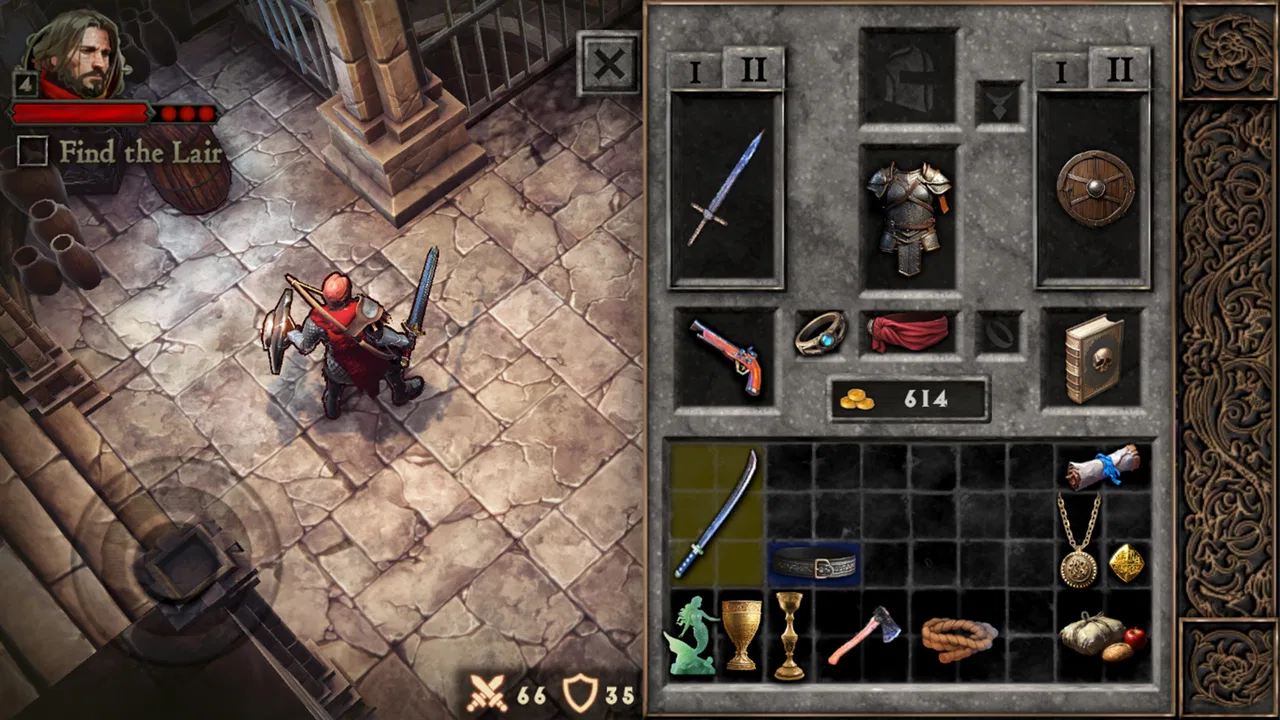
Shadowborn is the kind of role-playing game I reach for when I want a short burst of dark fantasy action rather than a long, slow campaign. It comes from Viva Games Studios and presents itself as an arcade RPG built around quick missions and battles worth replaying. After spending time with it, my main impression is that its appeal depends less on deep world-building and more on how quickly it gets me into a fight and how willing I am to repeat that fight to improve my results.
That focus makes it easy to understand, but it also creates a clear divide between players. If you enjoy compact combat sessions, gradual character improvement and a darker visual mood, this is an inviting free game to try. If you want a role-playing adventure with extensive dialogue, a huge map or a leisurely story, I would look elsewhere. The game knows what it wants to be: a fast, repeatable fantasy action experience, not a replacement for a large console-style RPG.
How Shadowborn feels in everyday play
I’ll focus on what makes these sessions feel practical rather than merely brief: choosing a moment when you can give a battle your attention, then using its outcome to decide whether another run is worth your time. That small approach helps me tell the difference between satisfying practice and repetition that has started to feel like a chore.
You May Also Like

 Blood Strike: 2.5 Anniversary
Blood Strike’s Loadouts Turn Every Drop Into a Tactical Gamble
A close look at Blood Strike’s custom loadouts: how fast access to signature weapons reshapes its battle royale rhythm, rewards preparation, and narrows the gap between fights.

 Pandora - Music & Podcasts
Pandora’s Music Is Easy to Start, but Harder to Recover
Pandora’s strength is its low-effort path from a seed to a station. Its weak spot is how much confidence it asks you to place in connection, setup, and quiet recovery.

 8 Ball Pool
 Is Built on Rivalries, Rematches, and Routine
A close look at the rivalries, rematches, shared routines, and unanswered safety questions that turn a quick pool match into a persistent mobile community.

 Samsung Music
’s Quiet Strength Is Playing What You Already Own
Its reach comes less from spectacle than from dependable access to a personal library. That simplicity is both the app’s strongest retention engine and its ceiling.

 AccuWeather: Weather Radar
AccuWeather Review: A Quick, Clear Forecast for Everyday Decisions
For everyday plans, the best forecast is the one you can understand quickly. AccuWeather makes rain timing, radar, and local conditions easy to act on, with a few trade-offs.

 Hill Climb Racing
Why Hill Climb Racing Still Turns Crashes Into One More Run
A tiny car, a bumpy hill and one more upgrade: Hill Climb Racing keeps resurfacing because its simple chaos makes every near-miss feel personal.
More From Our News Desk
View All News


Quick missions make the first impression
The most important part of the experience is its rhythm. Shadowborn does not ask me to settle in for a long opening before the action becomes relevant. Its missions are designed around getting to the point, which suits a phone particularly well. I can play during a short break, finish a focused encounter and put the device away without feeling that I have abandoned a complicated chain of events.
That speed is not only about how quickly a battle begins. It also changes how I think about progress. Instead of treating every session as a major expedition, I approach each one as a chance to test a tactic, improve a result or repeat a fight that still has something to teach me. The real strength is the compact play loop, not the promise of an enormous adventure.
For a realistic everyday example, I could open the game while waiting for a train, play through a mission, then return later when I have more time. That structure feels more practical than a role-playing game that requires me to remember a large quest, several characters and a precise location after every interruption. Shadowborn is easier to fit around ordinary life because its dark fantasy setting is delivered in smaller portions.
What the arcade RPG label means in practice
I would describe this as a role-playing game with an arcade mindset. The battles are the reason to return, while the fantasy setting gives those battles atmosphere and purpose. The emphasis on replayable encounters encourages experimentation, but it also means that repetition is part of the design rather than an occasional side activity.
That distinction matters when comparing it with the usual alternatives in the category. A traditional story-heavy RPG usually gives me more exploration and narrative context. A turn-based game gives me more time to consider every choice. A competitive action game may offer sharper moment-to-moment pressure against other players. Shadowborn sits between those expectations: it offers role-playing progression and dark fantasy presentation, but its strongest identity comes from short, active missions.
I found that positioning useful because it prevents the wrong expectations. I would not install it looking for a book-like fantasy plot. I would install it because I want battles that can be revisited without committing to a full evening. Players who enjoy repeating a stage to understand its timing or improve their approach will probably get more from it than players who need constant novelty.
Where the speed helps and where it can wear thin
Fast missions reduce friction, especially on a mobile device. There is less pressure to reserve a large block of time, and the game can serve as a focused break instead of taking over the whole day. This also makes it easier to learn the basics gradually. I can play a little, notice what works, and return with a clearer plan.
The trade-off is that replayable action can become familiar sooner than a broad adventure. Once I understand the shape of a mission, the pleasure depends on whether improving my execution remains satisfying. That is a personal dividing line. I enjoy repetition when it reveals a better route through a fight, but I lose interest when repeating the same task feels like maintenance rather than play.
For that reason, I would suggest treating each mission as a small challenge rather than rushing through it only to collect progress. Paying attention to when an attack is safe, when to preserve resources and when a risky move is worthwhile gives the compact format more depth. The game rewards a thoughtful arcade mindset more than passive grinding.
Heavy-use moments during demanding sessions
The most demanding moments are naturally the battles that ask me to stay engaged from start to finish. Rapid encounters, repeated attempts and longer play sessions place more pressure on both the player and the phone than simply opening the game and checking a menu. I noticed that the experience is best when I give it my full attention rather than trying to play while multitasking.
This is also where the game’s design can expose its limits. A short mission may feel energetic when I am alert, but the same concentration can become tiring if I keep replaying it late at night. I prefer to stop after a meaningful attempt instead of forcing several more runs when my decisions are becoming careless. That is not a flaw unique to this game, but Shadowborn’s repeatable battle structure makes the temptation especially noticeable.
Players should also think about how they use their phone. A device that is already busy with other demanding tasks may offer a less comfortable session than one with enough breathing room. I would not treat the game as a lightweight background activity. Its appeal comes from active play, so the best experience requires a screen, controls and attention that are all available at the same time.
Recovery after interruptions
Shadowborn works best for me when I divide play into deliberate sessions. If I am interrupted in the middle of a battle, the loss is more significant than being interrupted while browsing a menu, because the value of the encounter comes from maintaining focus. I therefore prefer to begin a mission only when I know I have a few uninterrupted minutes.
That habit also improves the game’s perceived speed. Starting a mission with a clear window of time makes it feel brisk and controlled. Starting one while expecting a call or another task makes the same structure feel less convenient. The game is suitable for short sessions, but short does not mean mindless. Its action still benefits from a player who can remain present.
When I return after a break, I find it easier to regain momentum because the missions are compact rather than sprawling. I do not need to reconstruct a large exploration route before enjoying the next encounter. That is one of the more practical advantages over expansive role-playing games, where interruptions can make returning feel like homework.
Reliability and the importance of a clean routine
My view of reliability here is closely tied to consistency during the core loop. A game built around quick missions needs a straightforward path from opening the app to beginning a fight. Shadowborn benefits when that path feels uncomplicated. The less mental overhead around a session, the more its arcade structure makes sense.
I still recommend approaching it with sensible mobile habits. Keeping the game updated, leaving adequate storage space and avoiding a crowded background workload are reasonable steps for any action-focused title. These are not special tricks for Shadowborn; they are simple ways to reduce avoidable interruptions when a game depends on responsive play.
One useful routine is to play a single mission first after opening the app, rather than immediately committing to a long run of repeats. That gives me a quick sense of whether the phone is behaving comfortably and whether I am in the mood for active play. If the session feels smooth, I can continue. If not, I have lost very little time.
The game has a Teen content rating, which is worth considering before handing it to a younger player. Parents should make their own decision based on the child’s age and tolerance for dark fantasy themes, rather than assuming that a cartoon-like mobile presentation automatically makes a role-playing game suitable for everyone.
Device requirements and practical constraints
The current version is 0.9.0 and requires an operating system of at least 12. That immediately rules out some older phones and tablets, so compatibility should be checked before planning to play. For someone with a relatively recent device, this requirement is unlikely to be a major obstacle, but owners of older hardware should not assume that a fast arcade presentation will work simply because the game is on mobile.
Resource demands are harder to judge from the genre alone. Dark fantasy visuals and active battles can make a game feel more demanding than a menu-driven RPG, but the safest approach is to test it on the device you actually use. I would pay attention to sustained comfort during several missions, not only the first minute after launching. A game may open quickly and still become less pleasant during extended action if the phone becomes warm or the battery drops faster than expected.
That is why I would avoid making Shadowborn the only game installed on an older device. If storage, battery life or general responsiveness are already concerns, a simpler role-playing game may be a better fit. On the other hand, players with a supported phone who want active fantasy missions have a reasonable reason to try it, especially because the download itself costs nothing.
The free entry point is helpful, but the in-app purchase range, from $1.99 to $94.99 per item, deserves attention. I would approach progression carefully and decide in advance whether I am willing to spend. The lower-cost options may feel manageable, while the upper end is a serious commitment for a mobile game. I prefer to enjoy the basic loop first and avoid treating purchases as a solution to every difficult encounter.
How to get more from repeatable battles
My first practical tip is to use repetition as a learning tool rather than an automatic routine. When a mission goes badly, I try to identify the specific decision that caused the problem. Was I too aggressive, did I spend an important ability too early, or did I fail to recognize a safer moment? Asking that question makes the next attempt meaningful.
A second tip is to change one thing at a time. If I alter every part of my approach after a failed attempt, I cannot tell what actually helped. Keeping the same general plan while adjusting timing or risk gives the battle a clearer feedback loop. This is a small habit, but it makes an arcade RPG feel more strategic without requiring a complicated spreadsheet.
A third trade-off concerns session length. Repeating a mission several times can improve confidence, but it can also turn entertainment into obligation. I get better results when I stop after a successful improvement instead of continuing until frustration replaces curiosity. That approach protects the game’s strongest feature: the satisfaction of a focused, manageable challenge.
I would also avoid judging the game after only one hurried attempt. Its value is tied to replayability, so the first run mainly tells me whether the combat style and atmosphere appeal to me. The more useful test is whether I want to try again with a different decision after a disappointing result. If the answer is no, the game may not match my tastes, even if the presentation is attractive.
Who should play it, and who should skip it
Shadowborn is a good match for players who like dark fantasy, active battles and progress built through repeated missions. It suits people who play on a phone in short windows but still want something more involved than a simple casual game. The role-playing elements give the action a sense of direction, while the arcade structure keeps the commitment manageable.
I would especially recommend it to someone who enjoys improving through practice. If you like replaying a stage to make cleaner decisions, this format can be satisfying. It is also a sensible option for a player who finds large open-world RPGs overwhelming and wants a more contained way to enjoy fantasy combat.
I would skip it if your priority is a substantial narrative, broad exploration or relaxed turn-based planning. I would also be cautious if you dislike repeating missions or if you want a game that can run comfortably on aging hardware. Players who are sensitive to in-app spending should set boundaries before playing, because the purchase range reaches far beyond a casual impulse buy.
My performance verdict after weighing the trade-offs
Shadowborn succeeds when I judge it by its intended scale. It is not trying to provide the breadth of a major role-playing adventure. Instead, it offers a focused dark fantasy loop that can deliver an energetic session without demanding a full evening. The perceived speed is one of its clearest advantages, while the need for concentration during repeated battles is its main limitation.
Its technical fit depends on the device as much as on personal habits. The minimum operating system of 12 gives a useful compatibility boundary, but supported software alone does not guarantee an ideal experience on every phone. I would test several missions, watch how the device handles sustained play and decide whether the action remains comfortable before investing time or money.
The game’s reception is encouraging, with an average rating of 4.7 from around four thousand ratings, and it has passed half a million installs. Those figures suggest that the compact formula has found an audience, although they do not change the central question: do you enjoy replayable action more than expansive role-playing structure?
My recommendation is to try Shadowborn free, play several missions with full attention, and make the purchase decision only after the repeatable loop has earned your interest. Viva Games Studios has chosen a clear direction, and I appreciate that clarity. For me, it is most enjoyable as a brisk, focused fantasy game for small windows of time. It is less convincing as a main RPG for players who need a large world, a deep story or constant variety. If your expectations match its arcade scale, Shadowborn is an easy game to keep in rotation; if they do not, a more traditional role-playing alternative will serve you better.
FAQs for Shadowborn
01What is Shadowborn and what can I expect from the gameplay?
Shadowborn is a captivating RPG that immerses players in a dark fantasy world full of mystery and adventure. Players can anticipate a mix of strategic combat, character development, and an engaging storyline. The game features a rich environment with stunning graphics and an atmospheric soundtrack, ensuring an exciting gaming experience.
02Is Shadowborn available on both Android and iOS devices?
Yes, Shadowborn is available for download on both Android and iOS platforms. You can find it in the Google Play Store for Android users and the Apple App Store for iOS users. Ensure your device meets the app's system requirements for the best performance.
03Are there in-app purchases in Shadowborn?
Shadowborn includes in-app purchases that allow players to enhance their gaming experience by acquiring special items, unlocking premium content, or accelerating progress. While these purchases can add value, the game is designed to be enjoyable without them, so players can choose their level of investment.
04Does Shadowborn require an internet connection to play?
Shadowborn offers both offline and online modes. While the main storyline and core gameplay can be enjoyed offline, certain features such as updates, leaderboard access, and social interactions require an internet connection. For a fully integrated experience, a stable connection is recommended.
05How does Shadowborn handle player privacy and data security?
Shadowborn takes player privacy and data security seriously. The app adheres to strict data protection regulations and implements robust security measures to safeguard user information. Players can review the app's privacy policy for detailed information on data handling and permissions required.
Pros
- Immersive graphics and sound design.
- Intuitive controls enhance gameplay.
- Engaging storyline with twists.
- Regular updates and new content.
- Multiplayer mode for added excitement.
Cons
- Occasional lag in high-action scenes.
- In-app purchases can be pricey.
- Requires a constant internet connection.
- Battery drains faster during play.
- Limited support for older devices.

Shadowborn
Gallery